


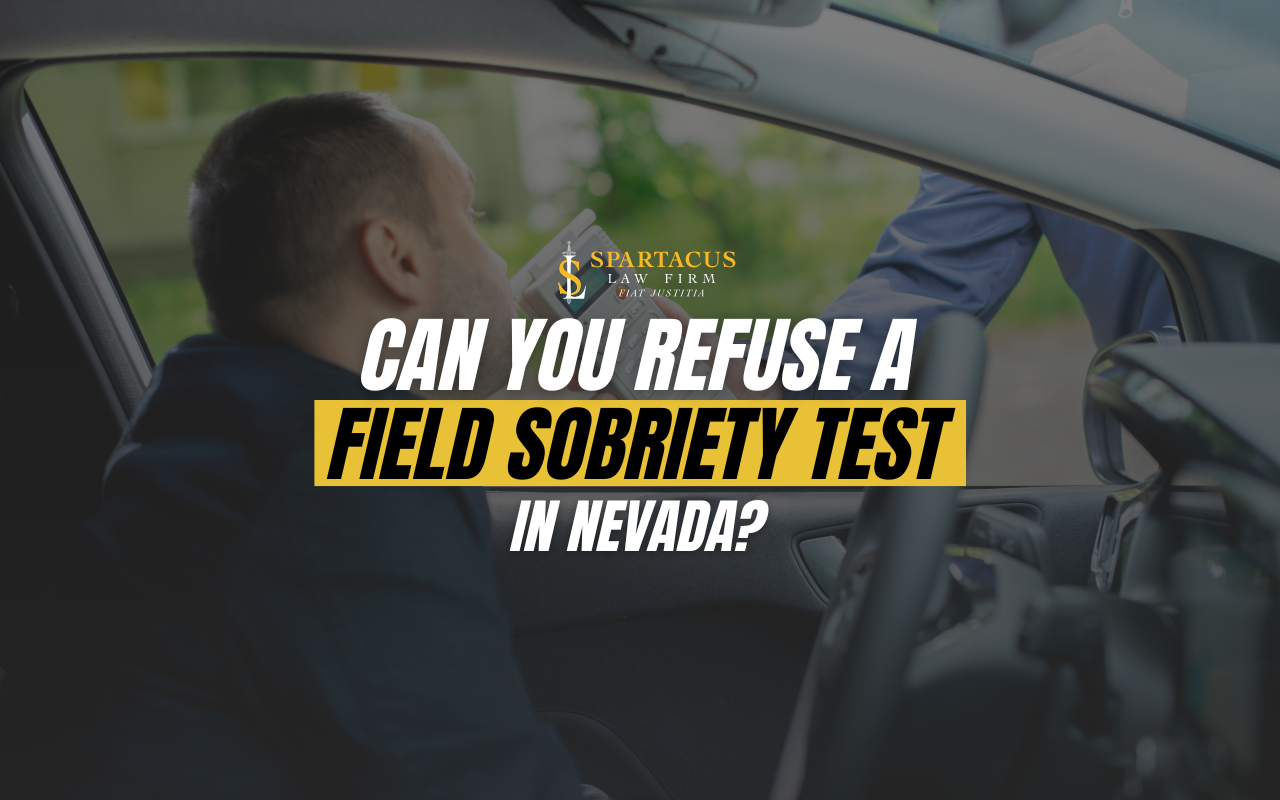

Blue lights flash in your rearview mirror. An officer approaches your window and asks if you’ve been drinking. Before you know it, you’re standing on the roadside being asked to perform field sobriety tests. Can you refuse? Should you?
Understanding your rights during a DUI traffic stop is critical to protecting yourself from self-incrimination. At Spartacus Law Firm, we’ve defended countless clients who wondered whether refusing field sobriety tests would have changed their case outcome. The answer is more nuanced than most people realize.
This comprehensive guide explains your legal rights regarding field sobriety tests in Nevada, the consequences of refusal, and how your decision can impact your DUI case.
The Short Answer: Yes, You Can Refuse
Nevada law does not require you to perform field sobriety tests. These roadside physical exercises are completely voluntary, though police officers rarely make this clear during traffic stops.
Field Sobriety Tests Are Voluntary
Unlike chemical testing, which carries specific legal consequences for refusal, field sobriety tests are optional. You have the constitutional right to decline these tests without facing automatic penalties.
Police officers may strongly encourage or even pressure you to perform field sobriety tests, but they cannot legally force you. No statute requires compliance, and refusal alone cannot serve as the basis for arrest.
Understanding this distinction is crucial when facing a DUI investigation. Many people assume they must comply with all police requests during traffic stops, but the law provides important protections.
Field Sobriety Tests vs. Chemical Tests: Critical Differences
Many people confuse field sobriety tests with chemical tests. These are entirely different procedures with distinct legal implications.
What Are Field Sobriety Tests?
Field sobriety tests are physical and cognitive exercises performed at the roadside to assess possible impairment. The three standardized tests include the horizontal gaze nystagmus test (following an object with your eyes), the walk-and-turn test (walking heel-to-toe in a straight line), and the one-leg stand test (balancing on one foot while counting).
Officers use these subjective assessments to gather evidence supporting DUI arrest and prosecution. Your performance is documented through officer observations, dash cam footage, and body camera recordings.
Chemical Testing: A Different Story
Chemical tests measure blood alcohol content through breath, blood, or urine analysis. Nevada’s implied consent law requires drivers to submit to chemical testing when lawfully arrested for DUI.
Refusing chemical tests after arrest triggers automatic license revocation for one year under Nevada law. This administrative penalty applies regardless of whether you’re ultimately convicted of DUI.
The distinction matters significantly. You can refuse field sobriety tests without automatic penalties, but chemical test refusal carries immediate DMV consequences.
Why Police Want You to Take Field Sobriety Tests
Understanding law enforcement motivations helps you make informed decisions during traffic stops.
Building Evidence for Prosecution
Field sobriety tests give officers additional evidence to support DUI charges. Even if you believe you’ll pass, these tests are designed to identify signs of impairment that strengthen the prosecution’s case.
Officers receive extensive training in administering and evaluating field sobriety tests. They know what to look for and how to document observations that suggest impairment, even in borderline cases.
Establishing Probable Cause for Arrest
Police need probable cause to arrest you for DUI. Field sobriety test performance often provides the additional evidence officers need to establish that legal threshold.
Without field sobriety tests, officers may lack sufficient probable cause for arrest, especially if you showed no obvious signs of impairment during initial contact. This procedural safeguard protects citizens from arbitrary arrest.
Creating Compelling Court Evidence
Prosecutors love field sobriety test evidence. Video footage of suspects stumbling, swaying, or struggling with coordination creates powerful visual evidence for juries.
Even perfectly sober people often perform poorly on these tests due to nervousness, medical conditions, or challenging environmental factors. Your “failure” becomes prosecution ammunition regardless of the underlying cause.
Consequences of Refusing Field Sobriety Tests
While refusal carries no automatic penalties, your decision does create certain consequences worth understanding.
No Automatic DMV Penalties
Unlike chemical test refusal, declining field sobriety tests triggers no administrative license action through the Nevada DMV. Your driving privileges remain unaffected by this decision alone.
This protection gives you significant leverage during roadside DUI investigations. You can refuse field sobriety tests without immediate consequences to your license or driving record.
Officer May Still Arrest You
Refusing field sobriety tests doesn’t guarantee you’ll avoid arrest. If the officer observed signs of impairment like erratic driving, alcohol odor, slurred speech, or bloodshot eyes, they may establish probable cause for arrest without test results.
However, your refusal eliminates one evidence source prosecutors would otherwise use against you. Whether this helps or hurts your case depends on your specific circumstances.
Refusal Can Be Mentioned at Trial
Prosecutors may tell juries you refused field sobriety tests, suggesting consciousness of guilt. They’ll argue you knew you’d fail the tests and therefore declined to take them.
However, skilled defense attorneys counter this argument effectively. Refusing potentially unreliable tests demonstrates good judgment, not guilt. Many innocent people refuse field sobriety tests on principle or based on legal advice.
What Happens If You Take Field Sobriety Tests
Understanding the alternative helps you evaluate whether refusal makes sense in your situation.
Test Results Used Against You
Any signs of impairment during field sobriety tests become evidence supporting DUI charges. Officers document every misstep, wobble, or mistake in their reports.
Video recordings capture your performance for prosecutor and jury review. These visual records prove difficult to explain away, even when legitimate factors caused poor performance.
Challenging Test Reliability
Field sobriety tests are notoriously unreliable. Medical conditions, physical limitations, age, weight, footwear, road conditions, and weather all affect performance independent of alcohol consumption.
Experienced Las Vegas DUI lawyers challenge field sobriety test results by demonstrating these alternative explanations. However, preventing the evidence from existing in the first place through refusal often proves more effective.
Still Face Arrest and Prosecution
Passing field sobriety tests doesn’t guarantee freedom. Officers can still arrest you based on other observations. Conversely, passing these tests rarely convinces officers to release suspects they already suspect of DUI.
The tests create a “heads you lose, tails they win” scenario. Poor performance supports arrest and prosecution. Good performance gets ignored if other factors suggest impairment.
Understanding Your Rights During DUI Stops
Knowing your constitutional protections helps you navigate tense traffic stop situations confidently.
Right to Remain Silent
The Fifth Amendment protects you from self-incrimination. You don’t have to answer potentially incriminating questions about where you’ve been, whether you’ve been drinking, or how much you consumed.
Politely declining to answer questions about drinking is within your rights. Officers may pressure you, but you can simply state you prefer not to answer without an attorney present.
Right to Refuse Searches
Officers need probable cause or your consent to search your vehicle. You can politely decline search requests. While this won’t prevent searches if probable cause exists, it protects your rights and creates important legal issues for defense attorneys to challenge later.
Never physically resist or obstruct officers, but clearly stating “I do not consent to searches” preserves your Fourth Amendment protections.
DMV Administrative Process
After any DUI arrest, you face two separate proceedings: criminal court and DMV administrative hearings. These run on parallel tracks with different rules and consequences.
You have just seven days to request a DMV hearing challenging license suspension. Missing this deadline results in automatic suspension. Contact an attorney immediately after arrest to protect your driving privileges.
When Refusing Field Sobriety Tests Makes Sense
Strategic refusal can strengthen your defense in certain situations.
You Have Medical Conditions
Inner ear problems, back injuries, knee issues, neurological conditions, and many other medical problems affect balance and coordination. These conditions cause field sobriety test failure regardless of sobriety.
If you have such conditions, refusing tests prevents officers from misinterpreting legitimate medical symptoms as intoxication. Your attorney can then focus defense on other evidence rather than explaining away failed test performance.
Environmental Factors Are Poor
Uneven pavement, gravel shoulders, poor lighting, heavy traffic, and adverse weather conditions all compromise field sobriety test validity. Performing these tests in such environments invites failure even when completely sober.
Refusing tests under these circumstances eliminates unreliable evidence from your case. Officers still might arrest you, but prosecutors face greater challenges proving impairment beyond reasonable doubt.
You’re Extremely Nervous
Anxiety and nervousness cause physical symptoms mimicking intoxication. Shaking hands, rapid heartbeat, and coordination difficulties all appear during stressful police encounters.
If you know anxiety will affect your performance, refusal prevents creating evidence of “impairment” that’s actually just nervousness. This decision protects you from your own stress response.

Chemical Test Refusal: A Separate Decision
After arrest, you face a different decision with more serious consequences.
Implied Consent Law
Nevada’s implied consent law requires chemical testing after lawful DUI arrest. Refusing breath or blood tests triggers automatic one-year license revocation.
This penalty applies regardless of whether you’re eventually convicted. The DMV imposes administrative suspension based solely on refusal, separate from any criminal case outcome.
Strategic Considerations
Despite harsh penalties, refusing chemical tests sometimes makes strategic sense. If you know your blood alcohol content exceeds legal limits significantly, refusal may improve plea negotiation leverage.
However, this decision requires careful evaluation of your specific circumstances. Consult with an attorney before making this choice if possible. Our attorneys regularly advise clients on whether chemical test refusal serves their interests.
How Spartacus Law Firm Can Help
DUI defense requires understanding the nuanced interplay between field sobriety tests, chemical testing, constitutional rights, and Nevada law.
Challenging DUI Arrests Without Test Results
When you refuse field sobriety tests, skilled attorneys attack the remaining evidence supporting probable cause for arrest. We examine traffic stop legality, question officer observations, and challenge any constitutional violations.
Without field sobriety test results, prosecutors often struggle proving impairment beyond reasonable doubt, particularly in first offense cases with marginal evidence.
Comprehensive Defense Strategy
Whether you’re facing misdemeanor or felony DUI charges, we examine every aspect of your case. Our attorneys analyze dash cam footage, body camera recordings, police reports, and chemical test results looking for weaknesses in the prosecution’s case.
We’ve successfully defended clients against DUI charges including marijuana DUI, drug DUI, and cases involving second offenses with enhanced penalties.
Making Informed Decisions During Traffic Stops
Understanding your rights is only useful if you can apply that knowledge under pressure. DUI traffic stops are inherently stressful situations where most people make snap decisions they later regret.
Remember these key points: field sobriety tests are voluntary, refusal carries no automatic penalties, you have the right to remain silent, and you can request an attorney before answering questions.
Politely exercising your rights isn’t obstruction. Courts recognize that asserting constitutional protections is your legal right, not evidence of guilt.
Protect Your Rights After a DUI Arrest
If you’ve been arrested for DUI in Las Vegas, whether you refused or completed field sobriety tests, contact Spartacus Law Firm immediately. Time is critical in DUI cases. Evidence must be preserved, witnesses interviewed, and DMV deadlines met.
Our experienced criminal defense attorneys provide aggressive representation designed to achieve the best possible outcome in your case. We’ve helped countless clients reduce charges, avoid conviction, and protect their driving privileges.
Don’t face DUI charges alone. Contact Spartacus Law Firm today for a confidential consultation. We’ll review your case, explain your options, and develop a personalized defense strategy. Your future is too important to leave to chance. Call now to start building your defense.

