
NPDB Guide for Healthcare Professionals
License Board Resources
Contact Us
The National Practitioner Data Bank: What Las Vegas Healthcare Professionals Must Know
A single report to the National Practitioner Data Bank can permanently derail your healthcare career. Whether you’re a physician facing criminal charges, a nurse dealing with license discipline, or any healthcare professional navigating regulatory challenges, understanding how the NPDB works is critical to protecting your livelihood.
At Spartacus Law Firm, we represent healthcare professionals throughout Las Vegas facing situations that could result in NPDB reporting. This comprehensive guide explains everything you need to know about this federal database and how to protect your professional future.
What Is the National Practitioner Data Bank?
The National Practitioner Data Bank is a federal government repository that collects and stores adverse information about healthcare practitioners. Created by the Health Care Quality Improvement Act of 1986, the NPDB serves as a permanent record of certain negative actions affecting healthcare professionals.
The NPDB’s Purpose
Congress established the NPDB to improve healthcare quality by restricting incompetent practitioners from moving between states undetected. The database prevents problem physicians, nurses, and other healthcare providers from simply relocating to another jurisdiction after facing disciplinary action.
The NPDB is managed by the Health Resources and Services Administration, a division of the U.S. Department of Health and Human Services. Reports submitted to the database remain permanent unless successfully disputed or voided.
Who Can Be Reported?
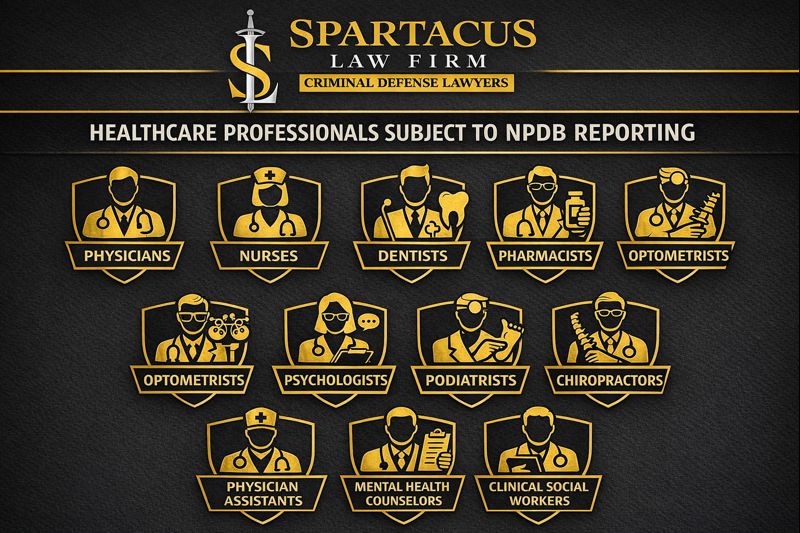
The NPDB tracks information on a wide range of healthcare practitioners including physicians, dentists, nurses, physician assistants, chiropractors, pharmacists, and other licensed healthcare professionals. Even healthcare entities, providers, and suppliers can have reports filed against them.
What Triggers NPDB Reporting?
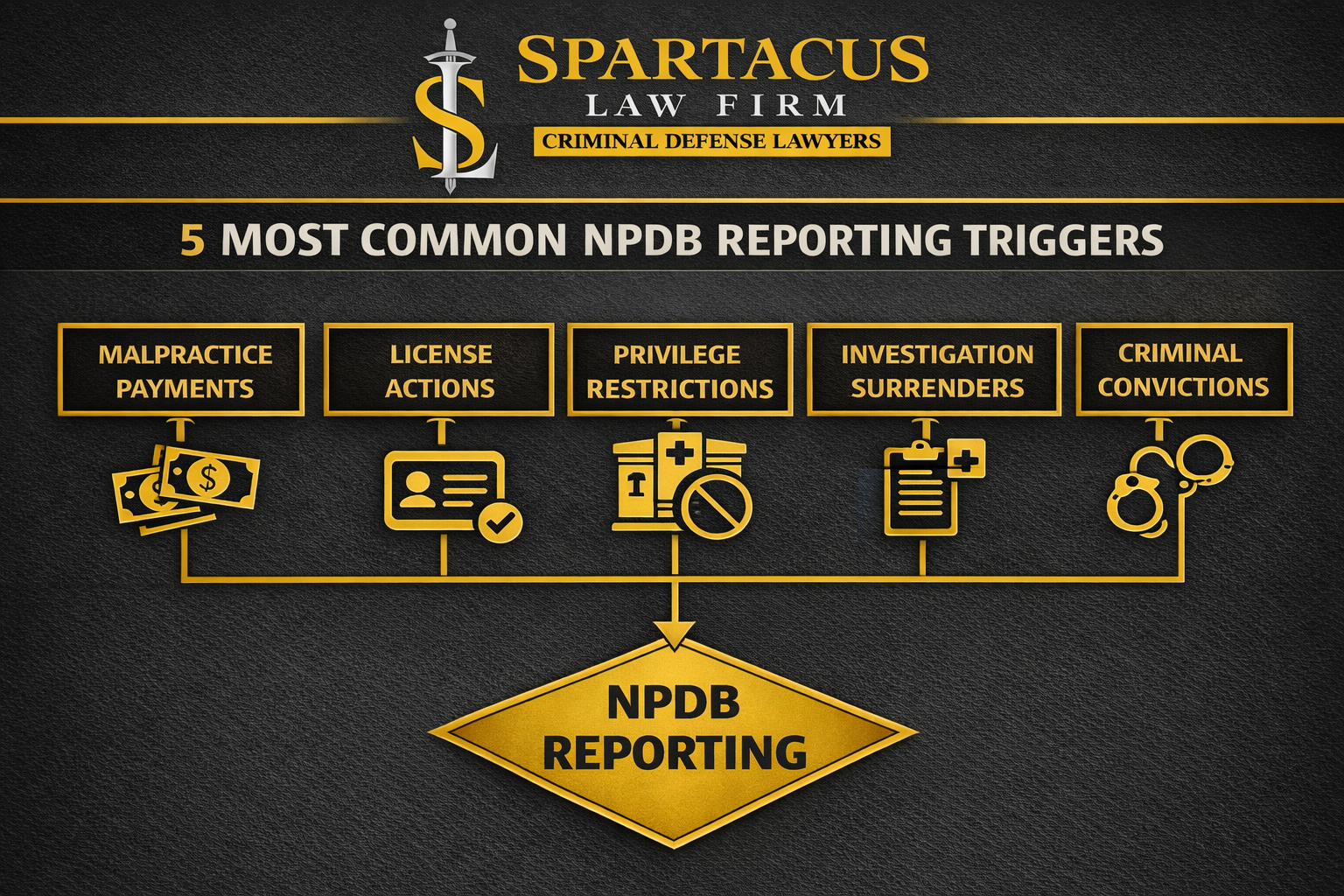
Understanding what actions trigger mandatory NPDB reporting helps you recognize situations requiring immediate legal intervention.
Medical Malpractice Payments
Any medical malpractice payment made by a third party on behalf of a healthcare practitioner must be reported to the NPDB. This includes both settlements and judgments, regardless of the payment amount. No minimum threshold exists.
Many practitioners mistakenly believe small settlements won’t be reported. This is dangerously wrong. Even nominal payments trigger mandatory reporting that creates a permanent record visible to hospitals, licensing boards, and insurance companies.
Adverse State Licensing Actions
State medical boards, nursing boards, and other licensing authorities must report adverse actions to the NPDB. Reportable actions include license revocation, suspension, reprimand, censure, and probation resulting from formal proceedings.
For Las Vegas healthcare professionals, actions by the Nevada Board of Medical Examiners, Nevada Board of Nursing, Nevada Board of Pharmacy, and Nevada Board of Dental Examiners all result in NPDB reporting when adverse action is taken.
Clinical Privilege Actions
Hospitals and healthcare facilities must report any adverse clinical privilege action lasting longer than 30 days. This includes privilege suspensions, revocations, or voluntary surrenders made while under investigation for professional competence or conduct issues.
Surrenders During Investigations
One of the most misunderstood NPDB triggers involves surrendering privileges or licenses while under investigation. Even if no formal action has been taken, resigning or voluntarily restricting your practice during an investigation related to professional competence requires reporting.
Many healthcare professionals think they can avoid NPDB reporting by simply resigning. This strategy backfires spectacularly, as the surrender itself becomes the reportable event.
Federal Program Exclusions
Exclusion from Medicare, Medicaid, or other federal healthcare programs triggers NPDB reporting. These exclusions often result from criminal convictions or civil judgments related to healthcare fraud or abuse.
Criminal Convictions
Federal and state prosecutors must report criminal convictions or civil judgments against healthcare practitioners related to delivering healthcare services. This creates a dangerous intersection between criminal defense and professional license protection.
How Criminal Charges Affect Healthcare Professionals
Criminal charges create unique risks for Las Vegas healthcare professionals because Nevada law requires reporting certain convictions to licensing boards, which then may take actions that trigger NPDB reporting.
DUI Charges and Professional Licenses
A DUI conviction can result in professional license discipline, particularly for nurses, physicians, and pharmacists. Nevada licensing boards view DUI as evidence of substance abuse or impaired judgment that threatens public safety.
A physician facing DUI charges must fight both the criminal case and potential license discipline. If the board takes adverse action based on the DUI, that action gets reported to the NPDB even though the underlying offense was criminal rather than professional.
Our Las Vegas DUI lawyers work closely with healthcare professionals to minimize both criminal and licensing consequences.
Drug Crimes and Healthcare Licenses
Drug-related criminal charges carry particularly severe consequences for healthcare professionals. Charges involving controlled substances, drug possession, trafficking, or diversion often result in immediate license suspension and eventual NPDB reporting.
Pharmacists, physicians, and nurses face heightened scrutiny for any drug-related offense. Licensing boards assume healthcare professionals should know better and typically impose harsh discipline.
Violent Crimes and Professional Conduct
Assault, domestic violence, and other violent crime convictions frequently trigger professional license discipline. Boards consider violent behavior incompatible with patient care responsibilities.
Healthcare professionals facing assault charges or domestic violence accusations need immediate legal representation addressing both criminal and licensing implications.
Fraud and Dishonesty Offenses
Any criminal conviction involving fraud, theft, embezzlement, or dishonesty creates serious professional license problems. Healthcare licensing boards view dishonesty as fundamentally incompatible with professional practice.
Who Can Access NPDB Reports?
NPDB reports aren’t public, but numerous entities can query the database for information about healthcare practitioners.
Mandatory Queriers
Hospitals must query the NPDB when practitioners apply for clinical privileges, seek to expand existing privileges, and every two years for all practitioners on their medical staffs. This mandatory querying ensures hospitals can’t claim ignorance of problematic histories.
State licensing boards routinely query the NPDB during license applications, renewals, and investigations. Your NPDB report will be visible to every state where you seek or maintain licensure.
Permissive Queriers
Health plans, healthcare entities, professional societies, and other organizations may query the NPDB for credentialing and privileging decisions. While not required to check, most do so as standard practice.
Practitioner Self-Queries
Healthcare professionals can query their own NPDB records at any time for a fee. Regular self-querying helps you discover reports promptly and initiate disputes quickly if necessary.
The NPDB Dispute Process
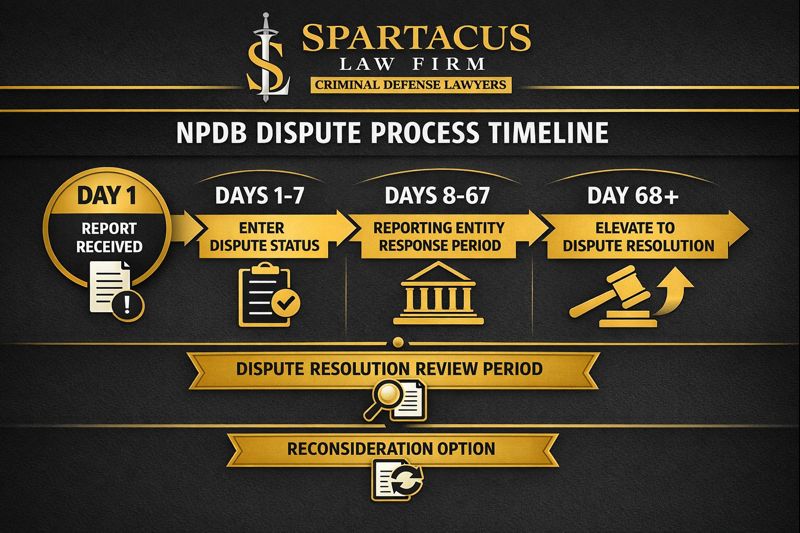
Disputing inaccurate NPDB reports requires following strict procedures. The dispute process has two distinct phases: dispute status and dispute resolution.
Entering Dispute Status
Healthcare professionals who believe an NPDB report contains factual inaccuracies must first enter the report into dispute status. This adds a notation visible to all querying entities that the report is contested.
You must contact the reporting entity directly and attempt to resolve the dispute. The reporting entity has 60 days to respond. During this period, the dispute notation remains visible on your report.
Elevating to Dispute Resolution
If the reporting entity doesn’t respond within 60 days or you disagree with their response, you can elevate the dispute to formal NPDB dispute resolution. This requires submitting specific documentation proving factual inaccuracy or reporting guideline violations.
What the NPDB Will and Won’t Review
The NPDB dispute resolution process has strict limitations. The NPDB only reviews disputes concerning factual accuracy or whether reports complied with NPDB reporting requirements.
The NPDB will not review disputes about the underlying merits of malpractice claims, adequacy of due process, or fairness of disciplinary actions. These substantive issues fall outside NPDB jurisdiction.
Dispute Resolution Outcomes
A dispute resolution manager will determine whether the report is accurate as submitted, contains factual inaccuracies requiring revision, was improperly submitted and should be voided, or involves issues outside NPDB review scope.
Reconsideration Requests
If you disagree with the dispute resolution decision, you may request reconsideration by submitting new information or explaining why issues were inappropriately reviewed. The dispute resolution manager will either affirm the previous decision or issue a revised determination.
Subject Statements: Your Opportunity to Respond
Even if you cannot successfully dispute an NPDB report, you can add a subject statement providing your perspective on the reported incident.
What Subject Statements Accomplish
Subject statements allow you to clarify your involvement, provide context, explain conduct, and supply additional information that puts the report in proper perspective. These statements remain with your report permanently unless you remove or edit them.
All entities querying your NPDB record will see your subject statement alongside the report. Well-crafted statements can significantly reduce the negative impact of NPDB reports by providing critical context.
Crafting Effective Subject Statements
Effective subject statements are factual, professional, concise, and focus on clarifying circumstances without making excuses. Avoid emotional language, personal attacks, or excessive detail.
Never include identifying information about patients or other parties in subject statements. The NPDB will redact any personal identifying information and may reject statements containing inappropriate content.
Professional License Defense for Las Vegas Healthcare Professionals
Protecting your professional license requires understanding how criminal charges, regulatory investigations, and NPDB reporting intersect.
Physicians and Medical License Defense
Nevada physicians face NPDB reporting whenever the Board of Medical Examiners takes formal disciplinary action. Our Las Vegas physician license defense attorneys work to resolve board complaints before they escalate to reportable actions.
Whether you’re dealing with doctor DUI charges or other criminal allegations, early intervention can prevent board action and NPDB reporting.
Nursing License Protection
The Nevada State Board of Nursing reports all formal disciplinary actions to the NPDB. Our Las Vegas nursing license attorneys help nurses facing board investigations, criminal charges, or workplace allegations that threaten their licenses.
Pharmacist License Defense
Pharmacists face unique NPDB risks related to controlled substance handling, prescription errors, and drug diversion allegations. The Nevada State Board of Pharmacy takes these matters seriously and frequently pursues license discipline.
Our pharmacist license defense attorneys defend pharmacists throughout the investigative and disciplinary process.
Other Healthcare Professionals
We also represent chiropractors, dentists, psychologists, and other healthcare professionals facing license discipline or criminal charges that could result in NPDB reporting.
Strategies to Avoid NPDB Reporting
Prevention is always better than damage control when it comes to NPDB reports. Several strategies can help avoid reporting altogether.
Resolve Malpractice Claims Early
Resolving potential malpractice claims before a written demand is made prevents mandatory reporting. Once a written claim exists and payment is made, reporting becomes unavoidable.
Fight Criminal Charges Aggressively
Criminal convictions related to healthcare delivery trigger NPDB reporting. Winning criminal cases outright or negotiating charge reductions to non-healthcare-related offenses prevents this reporting.
Never Surrender During Investigations
Resigning privileges, surrendering licenses, or voluntarily restricting practice while under investigation triggers mandatory NPDB reporting even when no formal action has been taken. Fight investigations rather than flee them.
Understand Investigation Triggers
Knowing when an investigation has begun is critical. Routine quality reviews differ from formal investigations focused on specific practitioners. Our professional license defense lawyers help you understand when investigations require legal intervention.
Why Legal Representation Matters
NPDB reports create permanent consequences that experienced legal counsel can often prevent or minimize.
Dual-Track Defense
Healthcare professionals facing criminal charges need attorneys who understand both criminal defense and professional licensing implications. We coordinate defense strategies addressing criminal charges while protecting professional licenses.
Board Investigation Defense
When licensing boards launch investigations, early legal intervention can resolve matters before formal disciplinary action becomes necessary. We negotiate with boards to achieve outcomes that avoid NPDB reporting when possible.
Dispute Process Expertise
Successfully disputing NPDB reports requires technical knowledge of reporting requirements and dispute procedures. We’ve helped numerous healthcare professionals correct or void improperly submitted reports.
Take Action to Protect Your Healthcare Career
NPDB reports create permanent obstacles to practicing medicine, nursing, pharmacy, or any other healthcare profession. Whether you’re facing criminal charges, licensing board investigation, malpractice claims, or have already been reported to the NPDB, immediate legal action is essential.
At Spartacus Law Firm, we provide comprehensive legal representation for Las Vegas healthcare professionals. We defend against criminal charges, represent practitioners before licensing boards, and dispute improper NPDB reports.
Don’t let a single incident destroy your healthcare career. Contact Spartacus Law Firm today for a confidential consultation. We’ll evaluate your situation, explain your options, and develop a strategy to protect your professional license and prevent NPDB reporting when possible.
Your years of education, training, and dedication deserve aggressive legal protection. Call us now to discuss your case with experienced attorneys who understand the critical intersection of criminal defense and professional licensing.